
Artist Biographies + Statements:
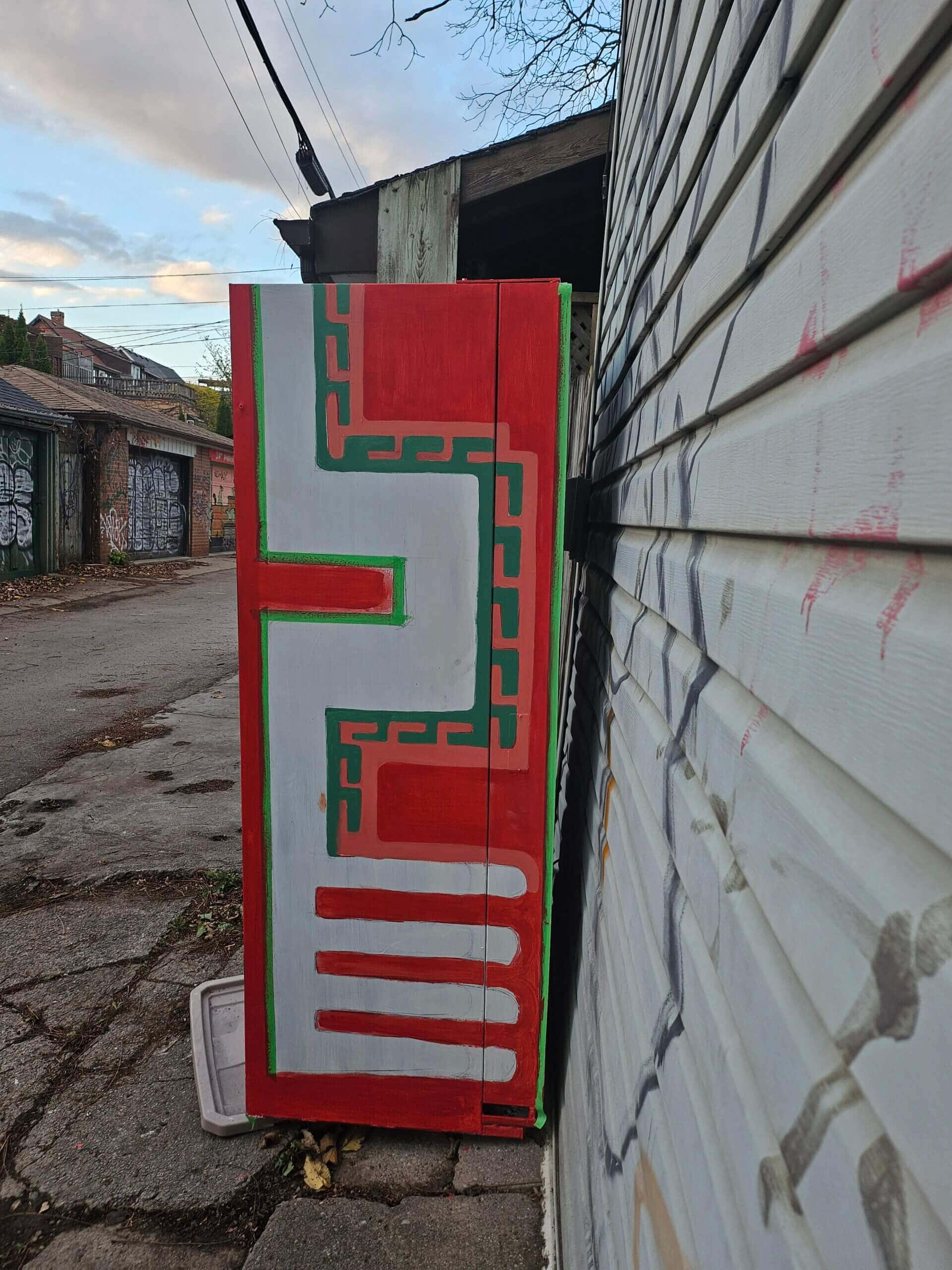
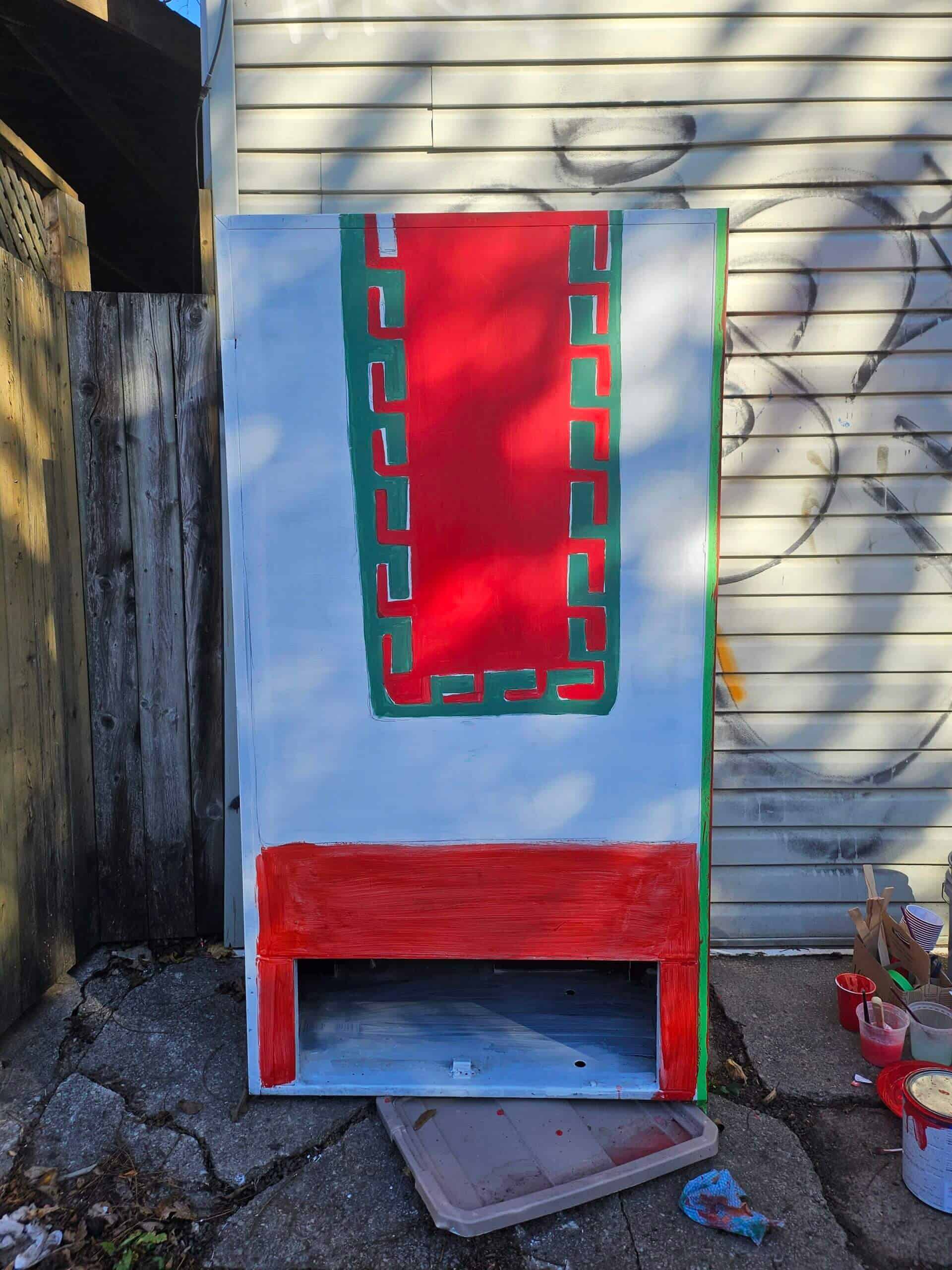
Chris Perez (born 1990) is a Canadian-based Filipino artist practicing in abstract painting and mural art. Perez pushes moments of arbitrary movement to create an inner dialogue with material and environment, like that of an abstract dance with painting. His influences are derived from street art, graffiti, murals, abstract art, and expressionist painting. He explores ideas behind personal and cultural identity using abstraction that touches uses the aesthetics and shapes of florals. Perez primarily uses latex, acrylics, and spray paint as his main mediums. He is currently developing a series of artwork that revolves around public art, and accessibility. Chris studied at OCADU and received a BFA in Drawing and Painting (2012).
Find more of his work online at chrisperez.ca.
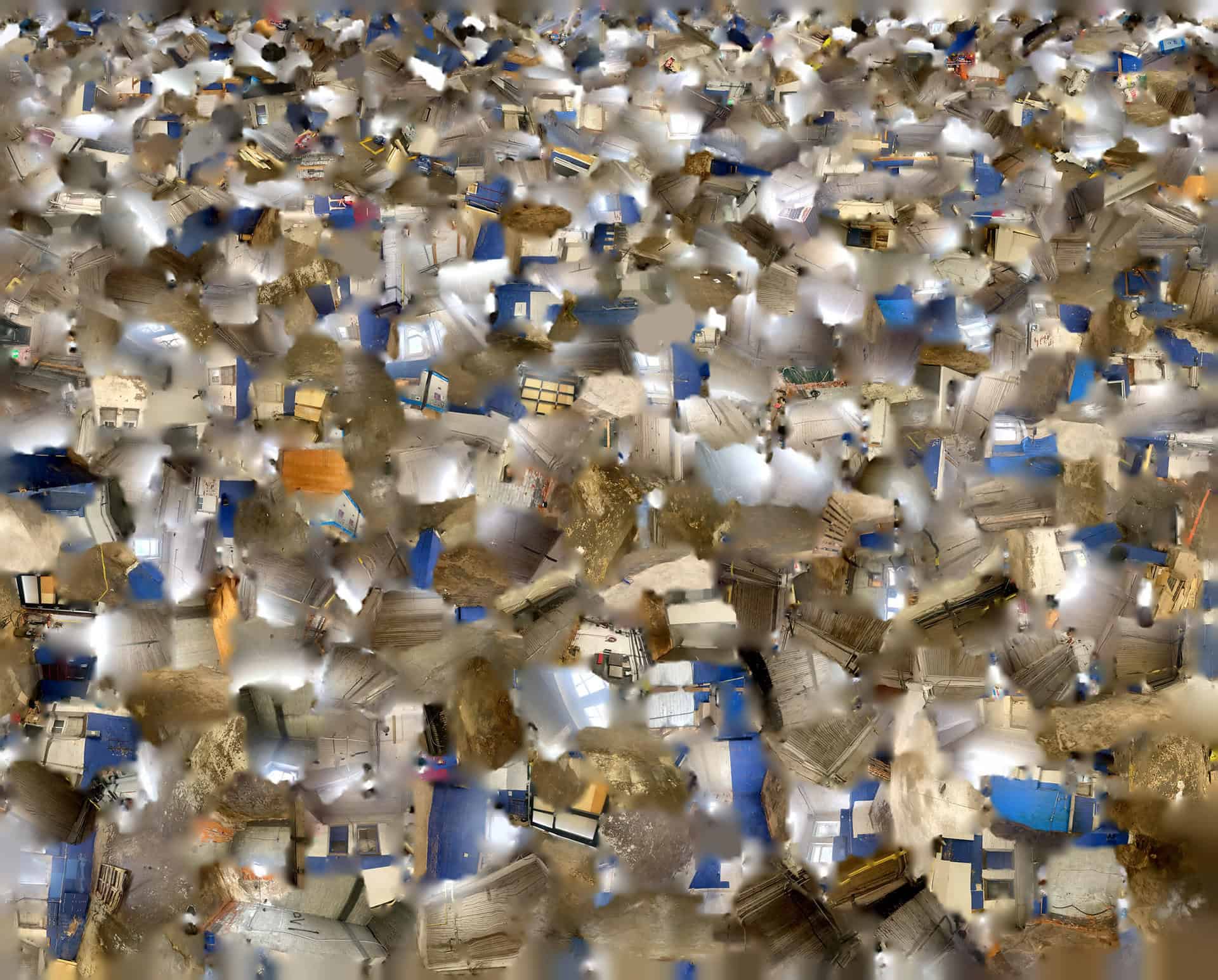
“This work explores spatial awareness and the relationship between objects, places, and personal experiences. Drawing from digital lenses, I reinterpret the world around me, flattening scanned three-dimensional spaces and objects into two-dimensional forms. Through this process, I focus on highlighting subtle details that may otherwise go unnoticed using paint.
The artwork is deeply influenced by my personal struggles with displacement, creating a bond between the objects and places I depict. Each painting reflects my connection to everyday occurrences and their significance. Captured spaces and items also form a digital library, which I then incorporate into my art and can be more easily accessible to the public.
Using UV mapping functions in Blender, I digitally scan objects and places, deconstructing them into flat images. These scans are taken with an iPhone and serve as the foundation for my paintings. The act of flattening these references allows me to reimagine spatial perspectives, challenging traditional perceptions of depth and structure.
While my method begins with digital tools, I bring it back to a traditional painting technique, allowing for a tangible and emotional engagement with the medium. The combination of digital scanning and hand-painted responses provides a layered interpretation of space, emerging technology, and the human experience. Through this, I aim to express my fascination with the ways we inhabit and interpret spaces, both physically and expressively.” – Chris Perez
Jet Coghlan is an Autistic, Latinx, Disabled, Mad researcher and performance artist. As an immigrant, they are committed to caring for and sharing the earth, combating individualism and selfish efforts to profit from the land. They believe it is imperative to actively learn from Indigenous perspectives and restore our relationships with the land and community. Jet continues to educate themselves and immerse in communities undergoing the process of decolonization. Despite the economic, physical, and psychological hardships of post-secondary education, Jet has demonstrated a decade-long passion for knowledge and experimentation across various fields. They currently collaborate with York and McMaster Universities, researching new methodologies that reject archaic, codependent systems of knowledge sharing.
“When I think about my art, the way I create, and the reasons behind it, I often encounter a wall of limitations. For me, art emerges from a necessity to process the world around me. I do not believe in art for art’s sake because my art stems from my experiences. These experiences are shaped by my principles, by the ways I have been colonized, by the race that has been assigned to me, and by the gender that has been chosen for me—NOT BY ME.
I use technology as an extension of how I process the world. I utilize everything at my disposal, from a phone to a camera, a pencil, a short clip, natural sounds, and city sounds. I am constantly recording something, and with the ubiquity of technology today, it has become easier for me to collect all this information. I use tech as an access tool.
I love creating things that appear spontaneous but are actually the culmination of countless hours of research and problem-solving. Whether it’s getting rid of a virus on my computer, making a document more efficient for screen readers, or working with sensor cameras and software to use movement to change images, the relevance in my work comes from the process of learning, experimenting, collaborating, living my life, and forming stronger connections with others. I aim to use my best skills to create, not just mundane “content” for the database of AI. Creating comes naturally to me because, like breathing, it is essential to my existence. I want my digital footprint to be a glitch in the system records.” – Jet Coghlan
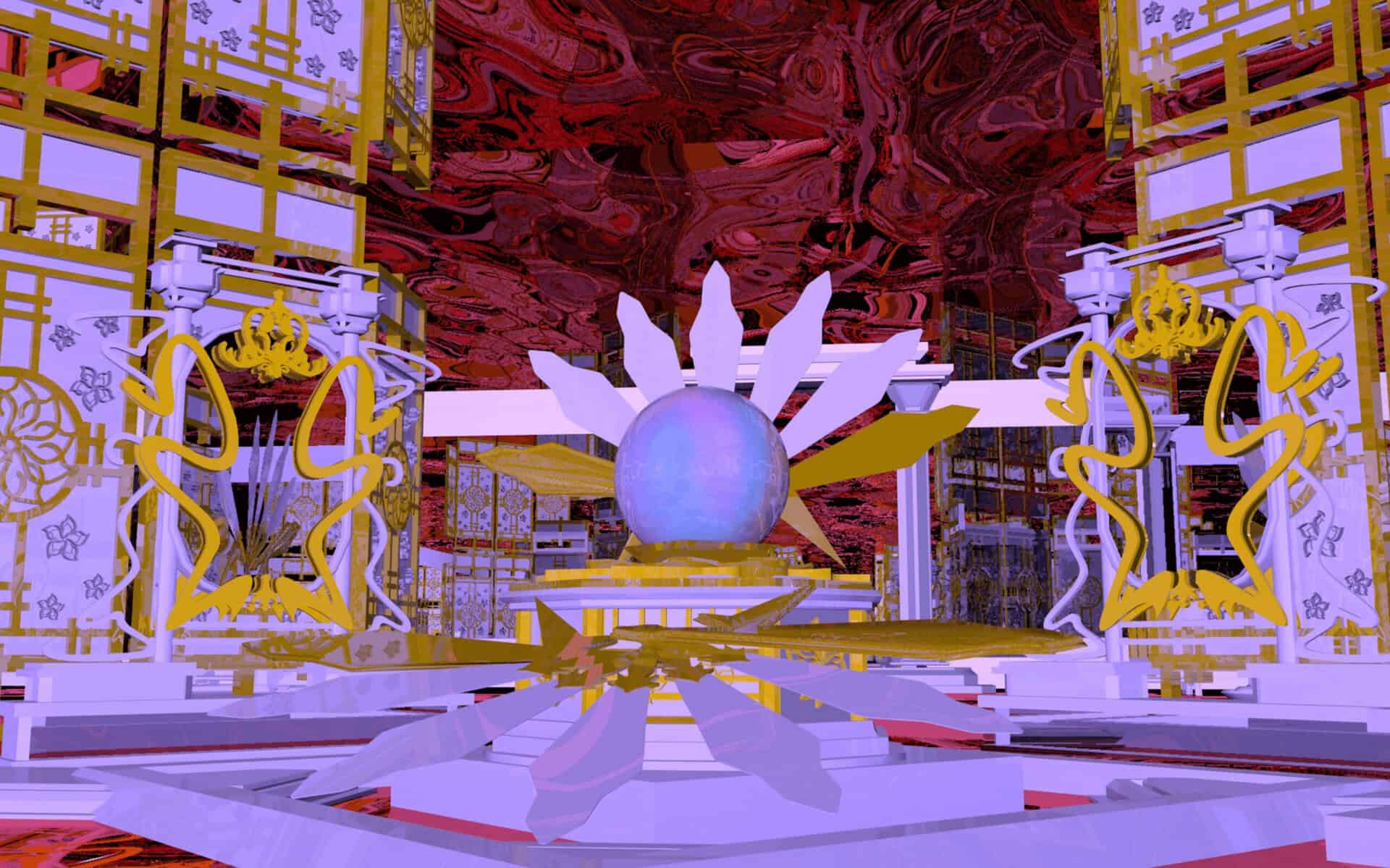
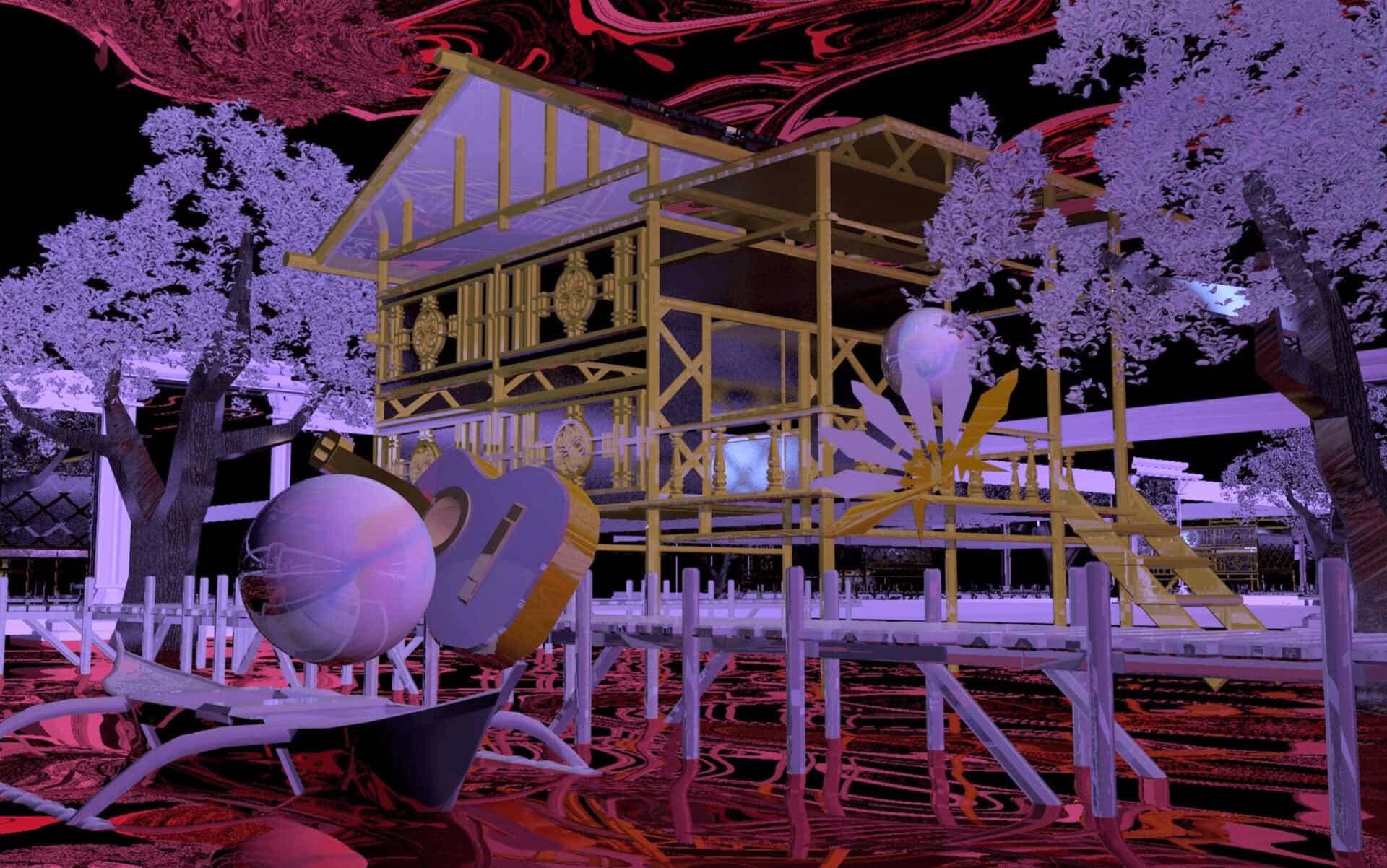
Zebv Diez is a Filipino Canadian Toronto-based digital artist, animator and painter. An OCAD University graduate who studied animation and digital painting. Informed by his education, his work explores the intricate relationships of identity and navigating predominant Western spaces as an Asian Minority. Born in the Philippines, he further uses his identity as an immigrant to produce idealized spaces to portray the experiences of marginalized bodies and the second-generation Asian diaspora. The work heavily relies on Asian aesthetics within a high-gloss 3D environment to convey the struggles of generational trauma, fetishization, assimilation and the othering of ethnic bodies.
Find more of his work online at zebvdiez.format.com.
“The first animation, Abaniko or Fan, depicts an object embellished in gold. To archive this object and place it within a digital space to speak about this specific period of my Filipino history. Not only to speak about this Spanish colonialism within this period but also the effects of Catholicism brought on by Spaniards. Whereas the conservative catholic culture required women to maintain modesty or “purity”, the fan became a form of expression and unity between two people but also the freedom for women to have ownership over one’s body and choices.
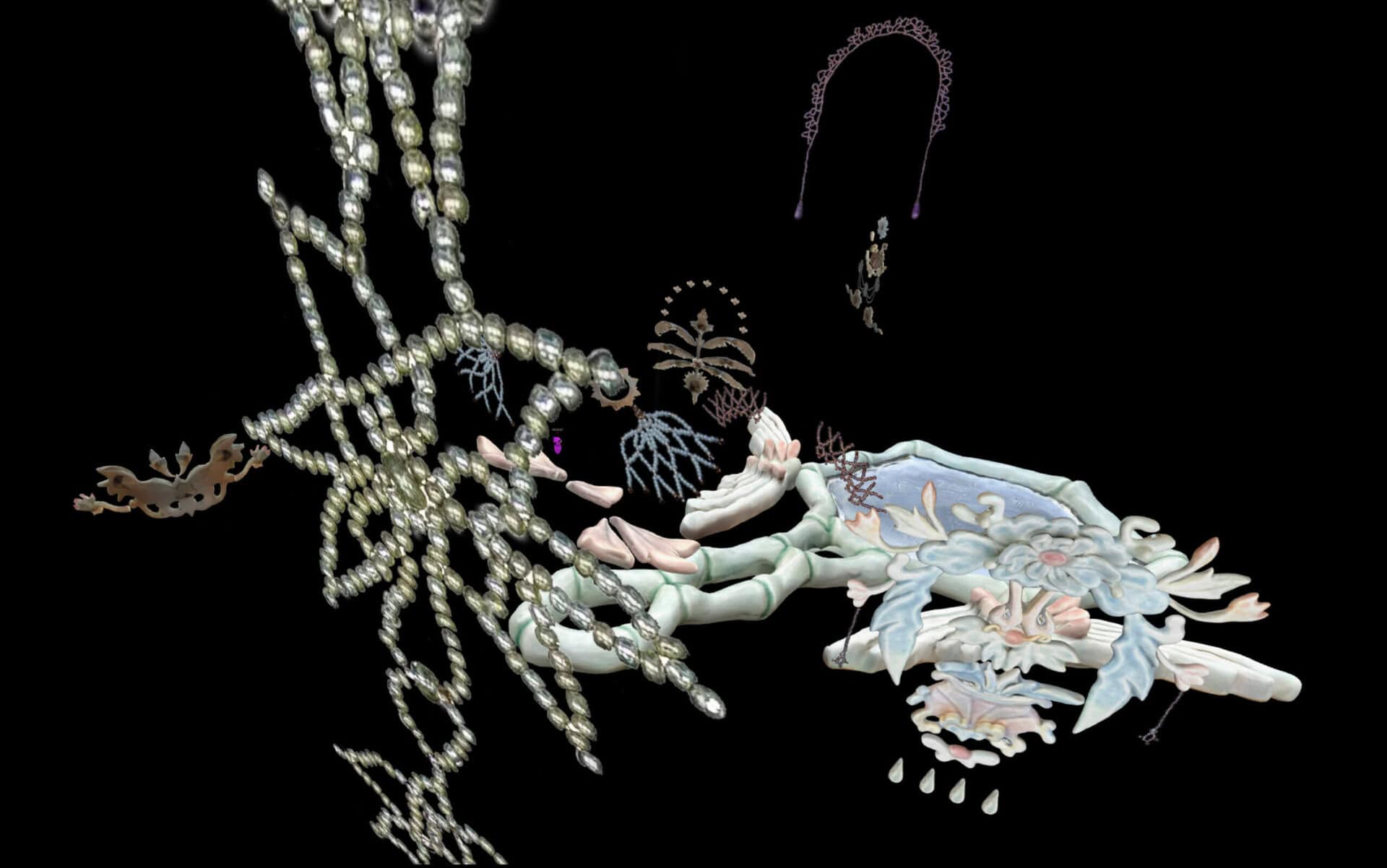
The second animation portrays the courtship in Filipino history, Harana, or the act of serenading was a romantic gesture among Filipinos. Influenced by Spaniards during colonialism, Harana was the act of singing outside the desired person’s home often at night by a windowsill or balcony, sung through with a guitar. It’s this spectacle of romanticism that I find lost in comparison to western society. This grand gesture of romance and love depicts the softer side of filipinos. Now thinking of everyday Filipinos, adjectives often used to describe them are often rooted in labor — “honest” or “hard working”, while admirable qualities, in a way it diminishes the people into a working unit, often exploited. This second animation is a work of love, at a most literal sense depicting the people as pearls, giving birth and speaking to their humanity.” – Zebv Diez
Lux Gow-Habrich (星尘) is an interdisciplinary visual artist of mixed, second-generation Chinese and German heritage. They blend gestural, craft and creative community practices to redefine our understanding of art and cultural praxis as sacred remedial forces that can deeply transform and mend. Lux’s interest in the body as archive, cultural objects and commemorative practices weave together complex diasporic experiences of loss and belonging, and embodied hybridization in blood and spirit – to unearth individual and collective untold stories and legacies of disabled, queer grief and empowerment. Committed to developing inclusive creative platforms and reimagining cultural futures, Lux’s practice is an expression rooted in relational and access dreaming.
Find more of their work online at luxgowhabrich.com.
“Ritual Objects for Disordered and Displaced Bodies” is a sculptural series that considers the power that objects have to both inform and express an identity. It explores self-tokenism, fragmented connection to cultural lineages, and the legacy of ornamentalism and its relationship to our material bodies. What began from a personal investigation into historical/fantastical objects of empowerment and healing, grew to involve perspectives and nuanced stories from community members living at similar marginalized intersections. By translating the objects into virtual forms, existing in an accessible web-based platform, the public is invited into a realm of possibility, curiosity and play, building intimate connection with complex diasporic futurities.” – Lux Gow-Habrich
Curator Biography:
Serena Zena (she/her) is an emerging artist and curator based in Canada. Her multidisciplinary practice delves into the lived experiences and cultural narratives of the Asian diaspora in Canada. Central to her work are themes of identity, intergenerational relationships, and Asian futurism. Her practice blends storytelling with both traditional and emergent media ranging from textiles to extended-reality.
About The Sari-Sari Xchange Project Exhibition Series:
From September 6th, 2024, to February 22, 2025, the Sari-Sari Xchange is collaborating with Centre[4]Arts to host a series of four exhibitions, showcasing the evolving landscape of digital media. Through artwork, events, and interaction, each exhibition will feature artists from the Sari-Sari Xchange project who explore digital media through various experimental methods.
Their approaches encompass a range of technologies, from collaborative projects to interactive installations to digital remixes. This dynamic series will highlight how these artists push the boundaries of digital expression and engage with new technologies, offering a diverse and evolving perspective on the applications of digital media. Curated by Serena Zena, each presentation will explore themes of care and technology, representations of space and identity, relationships between body and the digital environment and intergenerational connection through digital media.
The Sari-Sari Xchange (SSX) is an SSHRC-funded community-building research and creation project driven by artists from the Asian diaspora that collaborates with a network of artists, cultural workers, and researchers, all coming together to foster more inclusive expression in futurist world-making through XR technologies. The SSX reflects the collaborative partnership between Tangled Art+Disability, Reel Asian Toronto International Film Festival, Centre[4]Arts, York University and McMaster University. We undertake exploration in emergent XR technologies and new storytelling techniques, address under-representation and issues of systemic racism, as well as the inaccessibility of these new technologies for both creators and users. Through activities like Tech Jams, supporting artistic production in XR in the residency program, and co-creating asset libraries, we work to have more inclusive representation and better accessibility to emergent technologies.
For more information about the Sari Sari Xchange, please visit online at sarisarixchange.mcmaster.ca and @sarisarixchange.