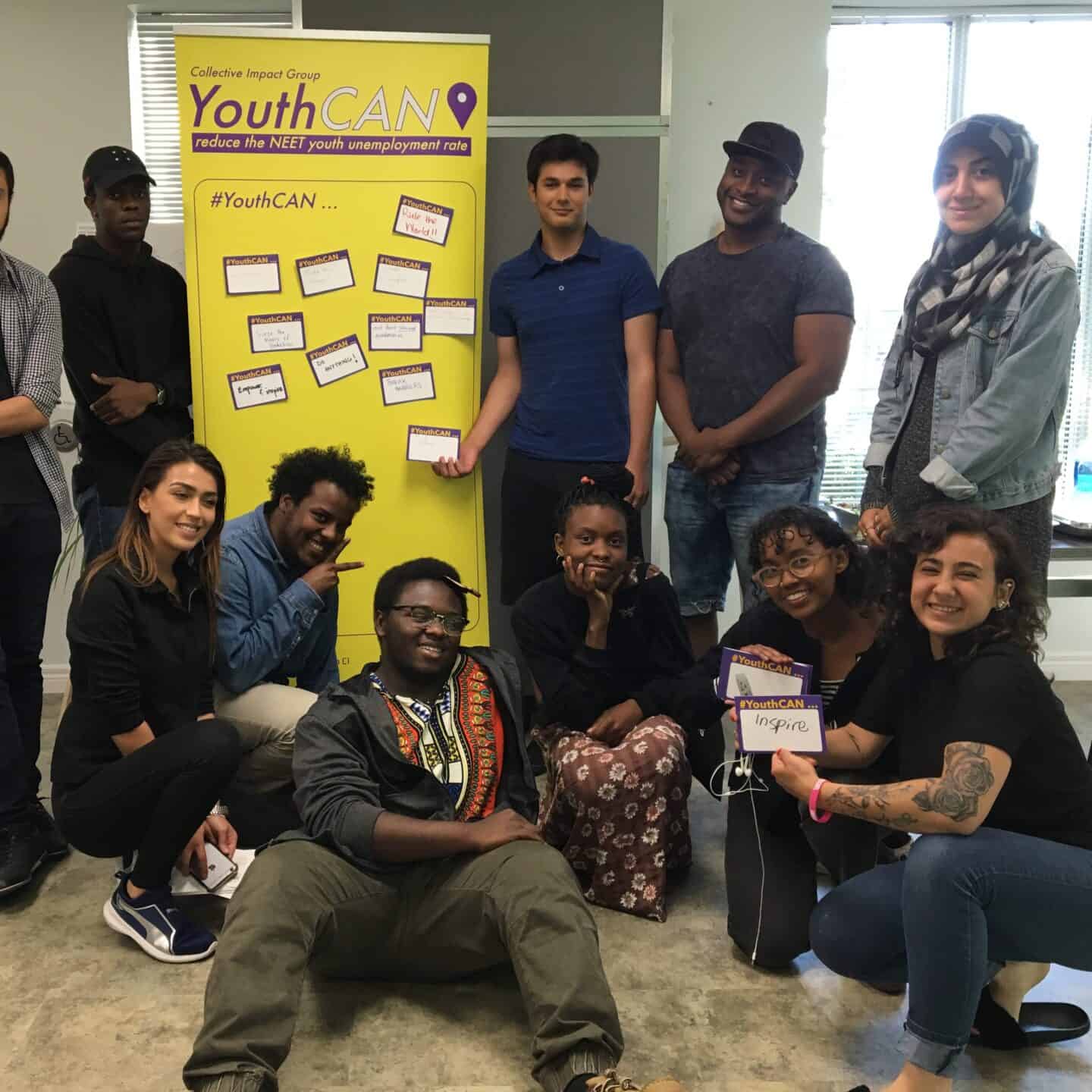
A collective impact group reducing the NEET (not in employment, education, or training) rate in our community.
In Collaboration With 30+ Hamilton Organizations
Centre[4]Arts established that in 2016, the NEET (not in employment, education or training) rate was 13.9% in the city of Hamilton, Ontario. The YouthCAN collective impact group aimed to help “meet youth where they are at” and reduce the rate in youth aged 15 to 29 by 10%.
Each year that it ran, YouthCAN was able to meet or exceed its intended impact. According to Stats Canada, in 2017, Hamilton’s NEET rate was reduced to 13%. By 2018, it was down to 11.8%.
This program placed a dedicated focus on increasing the capacity of NEET youth, the community of organizations that support them, and the employers that employ them.
Online Employment Platform Creation
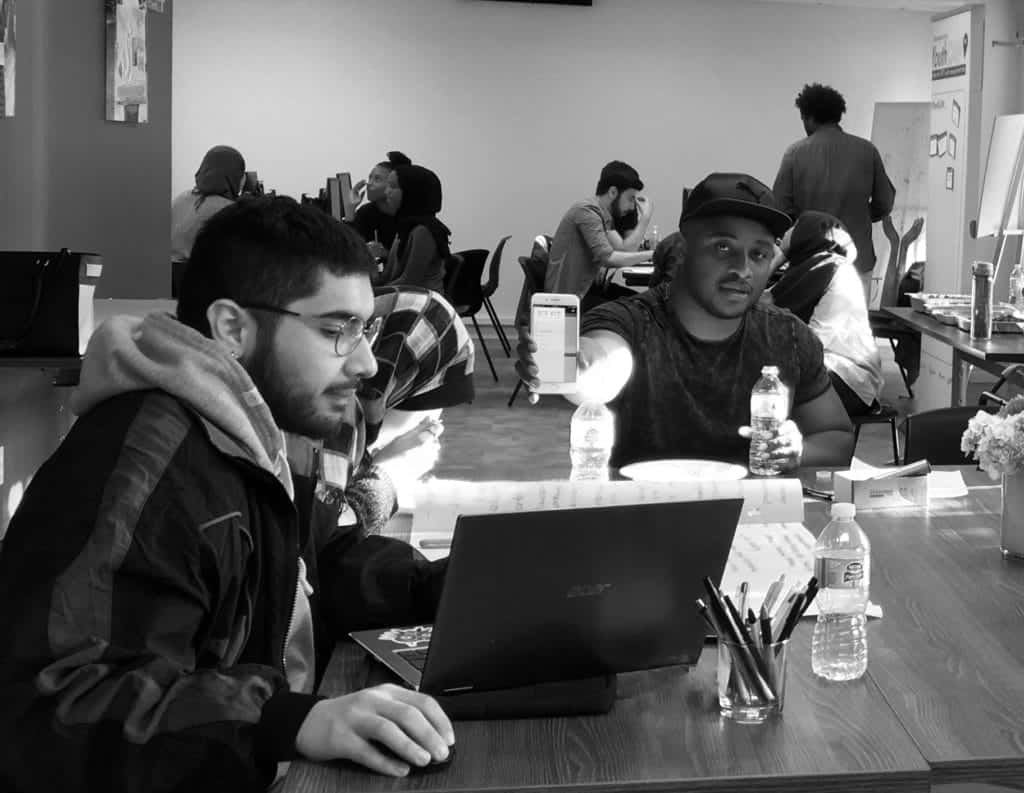
McMaster Research Shop (MRS) and YouthCAN program co-chairs conducted a citywide community-based research project to determine the wants and needs of youth, with respect to online job application support and employment. Ten private sector companies participated in the research component of the online platform.
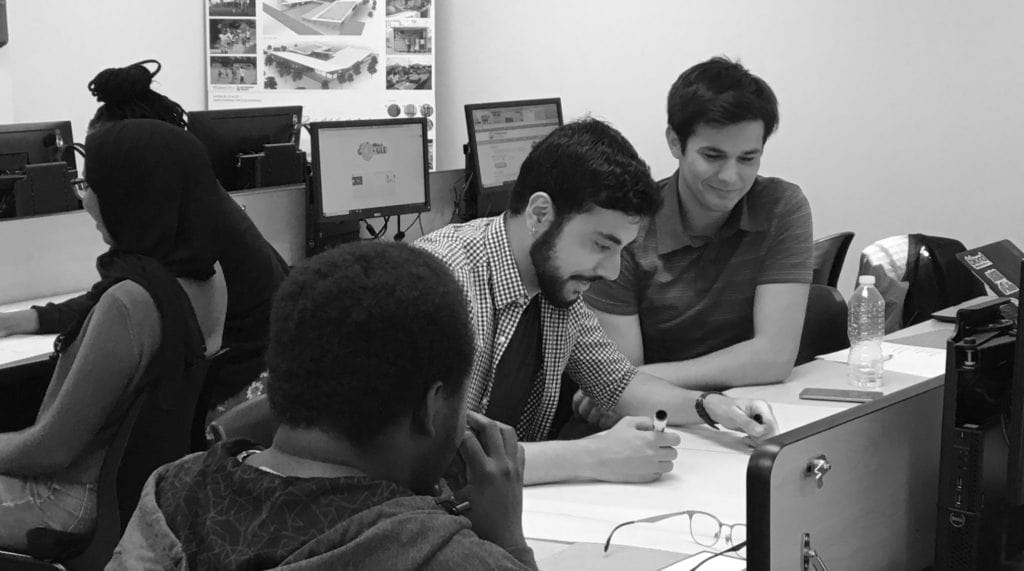
YouthCan hired 16 youth consultants to help steer the development process and ensure we successfully helped reduce the barriers to applying for work online.
Both digitally and in-person, organizations were consulted and coordinated with, including Workforce Planning Hamilton, The Adult Basic Education Association, The City of Hamilton, Path Employment, Hamilton Centre for Civic Inclusion, McMaster University, Mohawk College and Employment Hamilton. These organizations and the individuals involved helped YouthCAN to strategize and assess the employment needs of youth in Hamilton.
Construction of a web-based job board platform was completed to help centralize local entry-level jobs and reduce the stigma of accessing social support. Over 400 employment opportunities and 150 community supports were collected and made accessible.
Modernizing The Way We Work
YouthCAN assisted fellow community youth service providers in navigating challenges of the evolving digital landscape. Through the provision of essential equipment, dedicated space, and guidance from youth, YouthCAN empowered service providers with the capacity to create digital content and implement effective outreach strategies. This support was crucial in helping them recover from the decline in enrollment for traditional social service programming in Hamilton.
Social Enterprises + New Beginnings
In 2024, YouthCAN focused on addressing critical gaps for NEET youth by providing valuable skills delivered through a screen printing program, introducing participants to the transformative concept of social enterprise.
Through a series of engaging workshops, local young adults had the opportunity to design and screen print their own t-shirts and tote bags. These hands-on experiences fostered healthy creativity and opened up pathways for understanding how social enterprises can drive meaningful change.
2025 also marked an important evolution for YouthCAN. Centre[4]Arts integrated our impact model into a broader employment program, creating a more cohesive approach to empowering NEET youth. YouthCAN is now merged and officially part of our Digital Pipeline [4] Youth program, continuing our unwavering dedication to building skills through the arts, supporting community employment organizations, and connecting young adults with meaningful work opportunities.