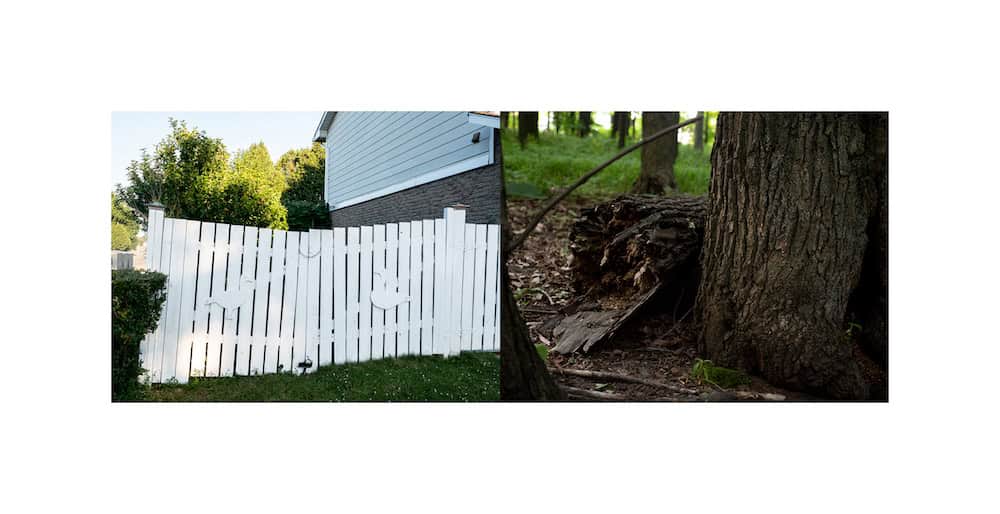
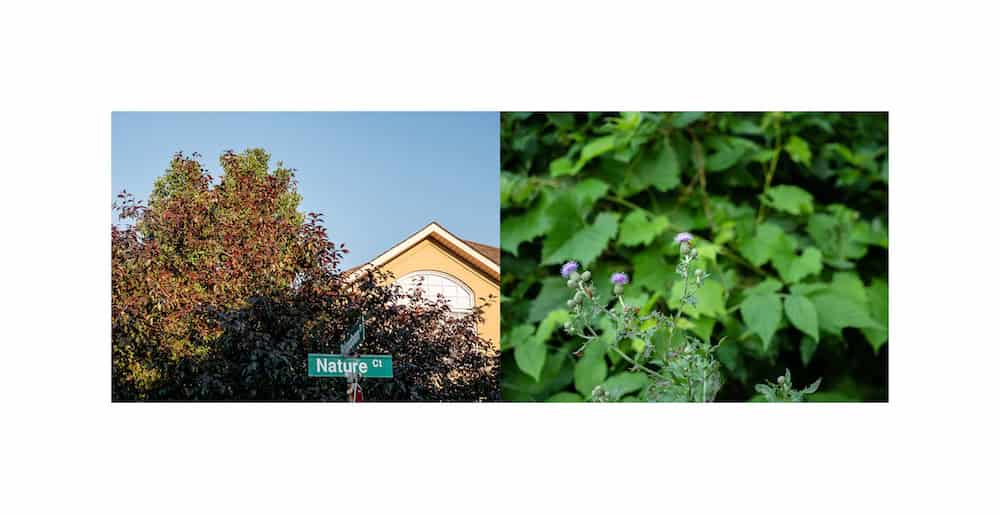
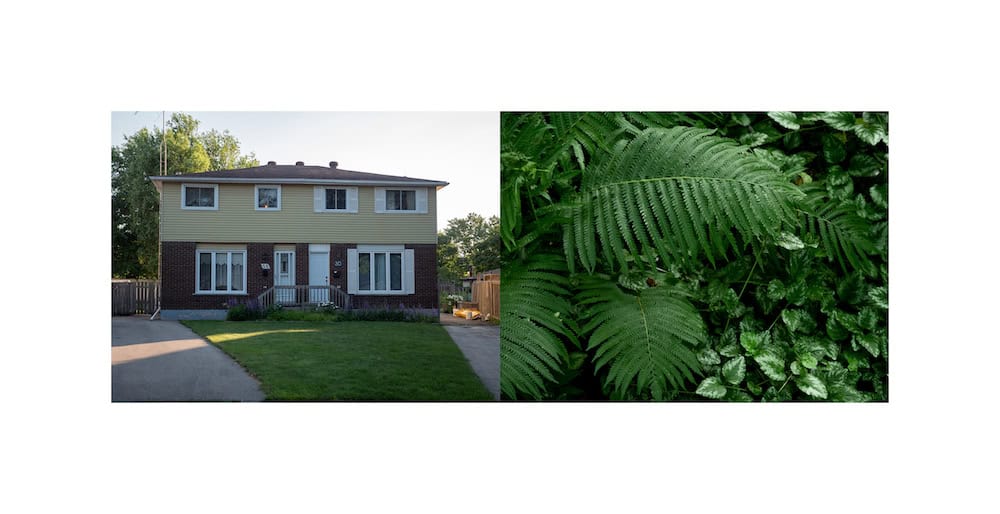
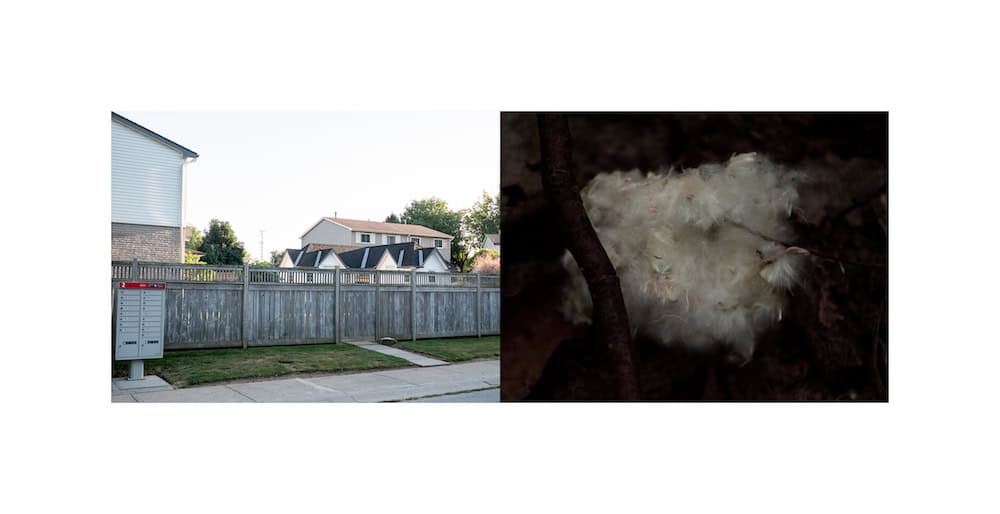
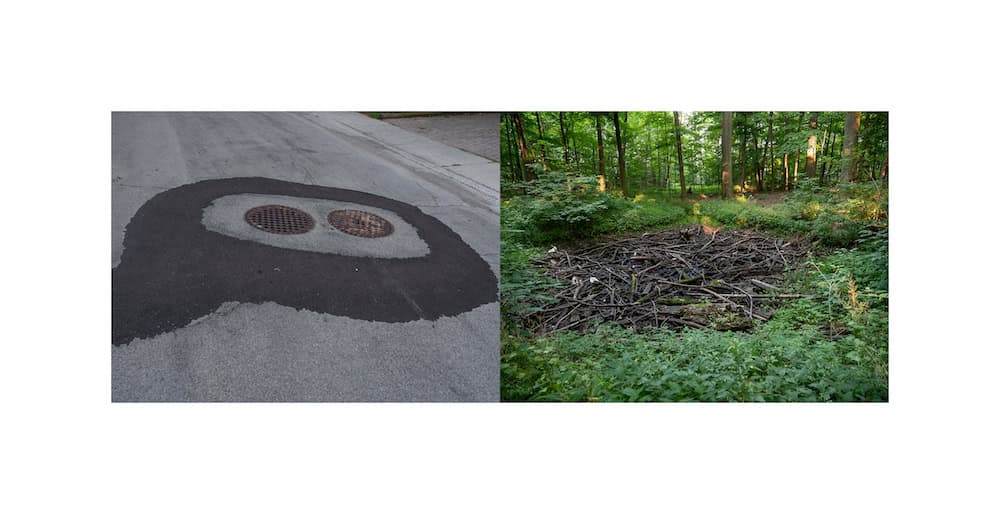
Making work about the specific location of Brigadoon Drive in Hamilton, is making work about this kind of no place, this kind of false blank space. Brigadoon asks questions about what it means to live in a constant reminder of artificially constructed nostalgia. This idea of nostalgia, and landscape, is intended to complicate the problems of colonial space.
Hamilton, Ontario is named after a town in Scotland, just like Hamilton in New Zealand. It becomes a fantasia, a colonial attempt to reclaim a colonial experience, a twice removed nostalgia for a settler view of a built environment.
Brigadoon is a street up the escarpment in Hamilton. It is named after a 1954 Broadway musical. The musical is about a magical town in the Scottish highlands, which manifests itself every two hundred years. Two New Yorkers get lost there, find love there, get lost, and try to return. The musical is full of a kind of kitsch understanding of Scotland, via a three or four generation remove of the newcomer experience. There are other Brigadoon streets or avenues or drives, in Dartmouth in Nova Scotia, Pointe Claire in Quebec, and Vancouver – literally across Canada. There must have been something about these new suburbs, which seemed almost unreal, a kind of hopeful fantasia, leading to an irony of non-place. Not even the Scotland of origins, or the Scotland of memory, but tripling down on a Scotland that never existed. This is how European newcomers thought of their land, not only in post World War II, but earlier, perhaps all the way to the first contacts between indigenous people and colonists. Isn’t Terra Incognita a kind of Brigadoon?
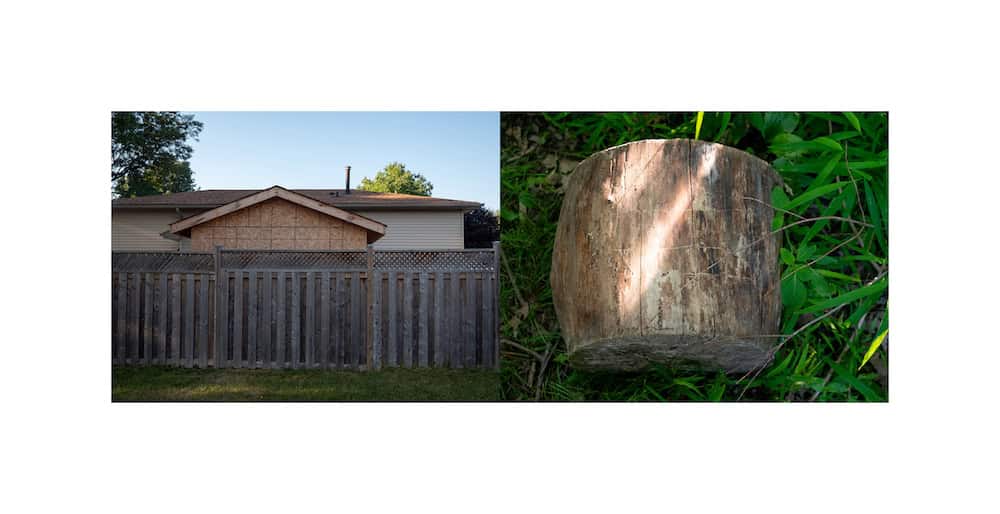
Brigadoon Avenue is an archive of built environments, 1950s Salt Boxes, 1980s split levels, the current mini mansions, all circling a park. This park is not quite wild, but exists due to an accidental benelifence. The lack of use, rather than the deliberate use, the idea of a woods in the middle of this suburb is as much an artificial fantasia (perhaps more so) than the built environment that surrounds it.
These are Canadian landscapes, half of the built environment, and half of wilderness, are intended to be critiques of the history of landscape creation, and also photographic irony. They are inspired by the formal blankness of the Vancouver school, but more documentary. They are inspired by work like Krieghoff, but with more irony. They recognize the failure of utopia in traditional representations of images of “wilderness”, in the suburbs, intend to both investigate what documentation of the Canadian built environment could mean, but also refuse the Canadian tradition of landscape depiction.