For most of my professional art practice, painting has been my primary focus. About 10 years ago, I participated in a pinhole photography workshop, sparking an ongoing investigation into this challenging and exciting medium.
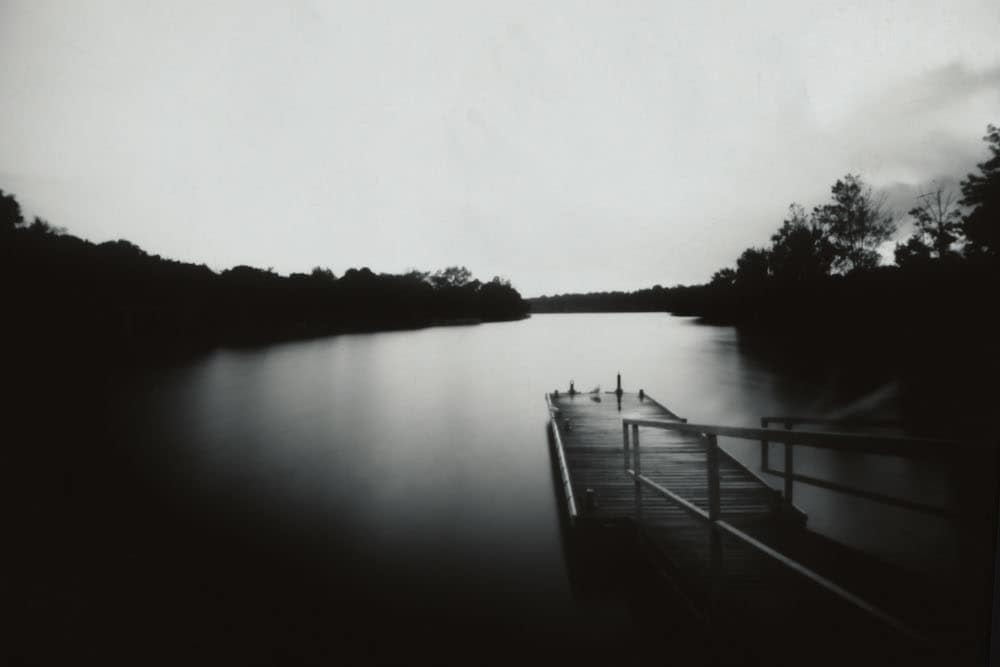
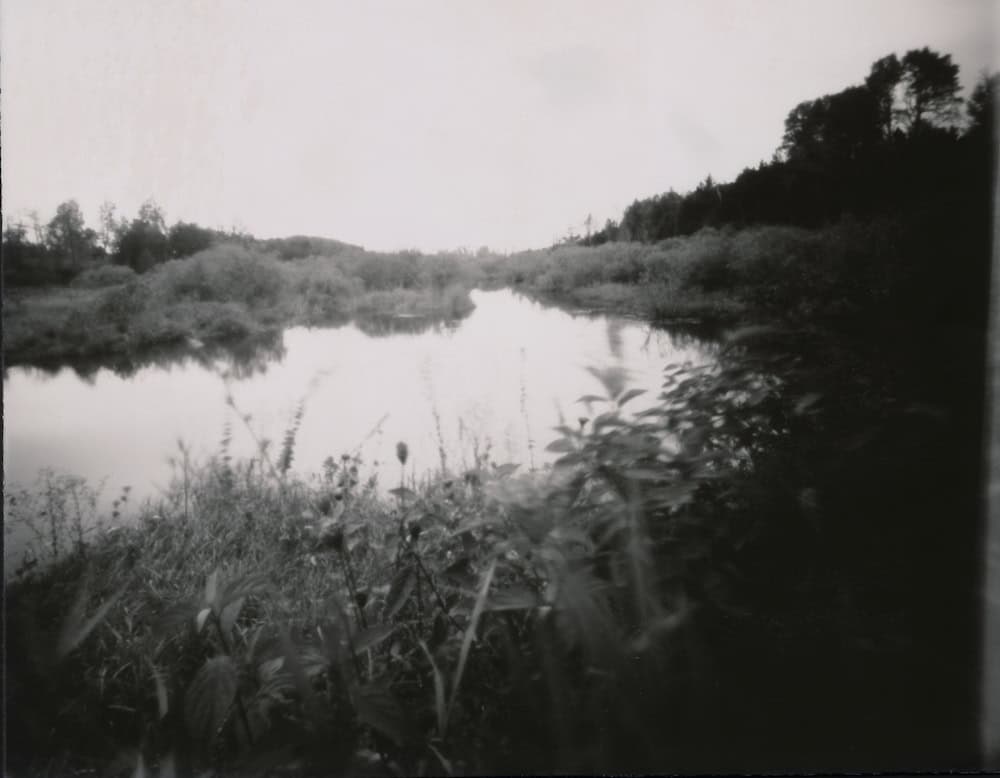
In Light, Unexpected, I created pinhole photographs using cameras I make with material salvaged from the recycle bin or thrift store. The ‘camera’ is any container that I can make light-proof, and that opens so I can load and unload the ‘film’. Most of my containers are former cookie or tea tins. For film, I use light-sensitive photo paper.
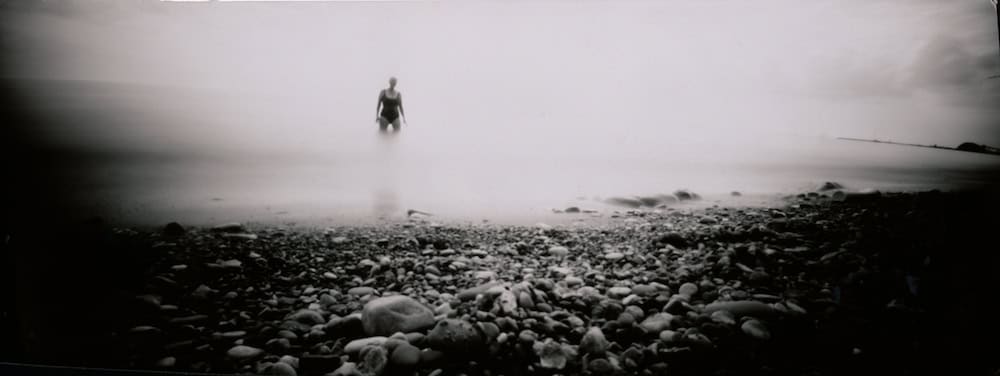
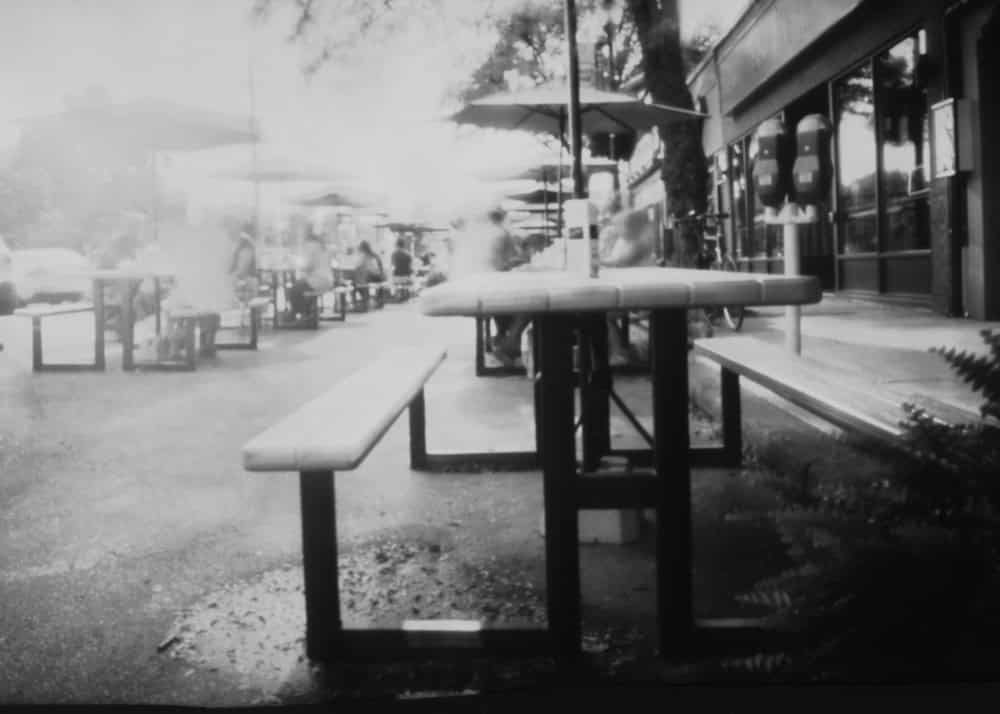
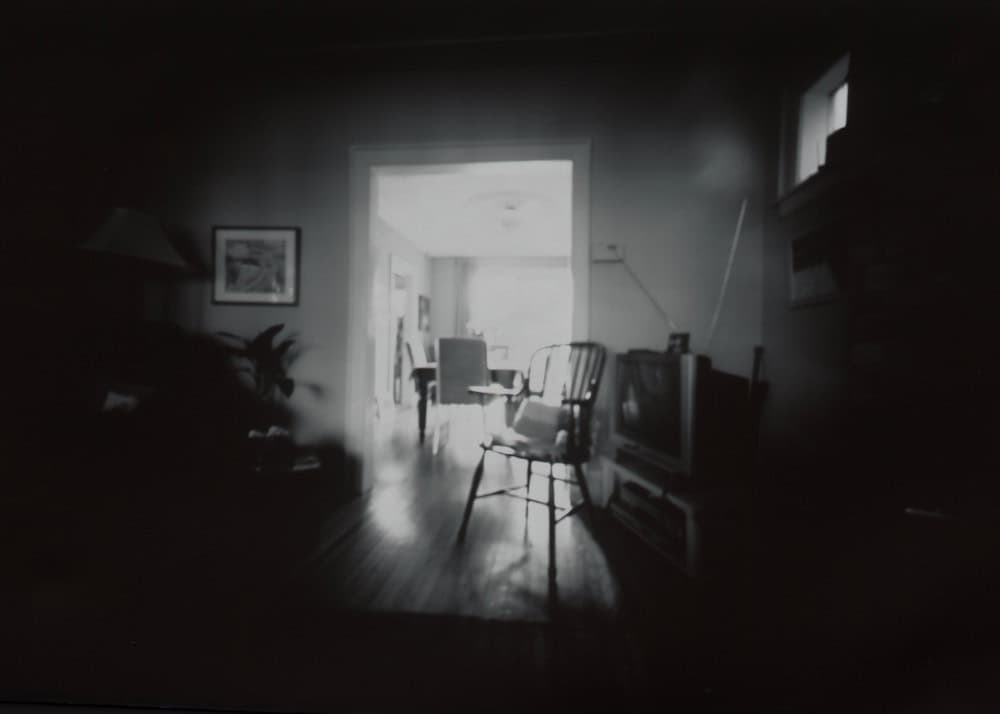
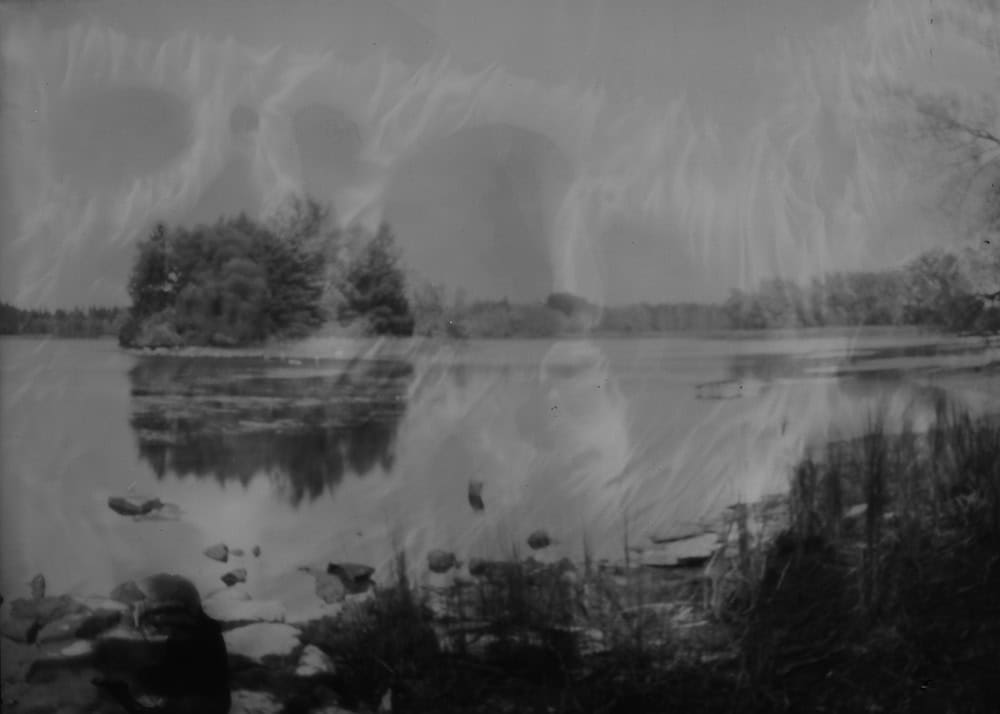
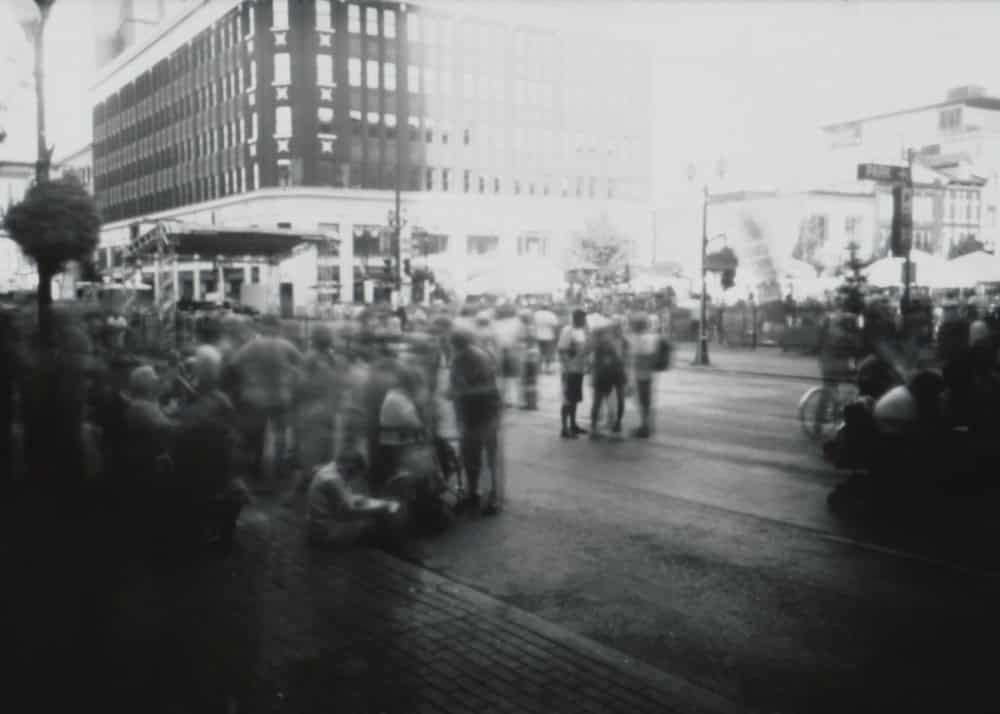
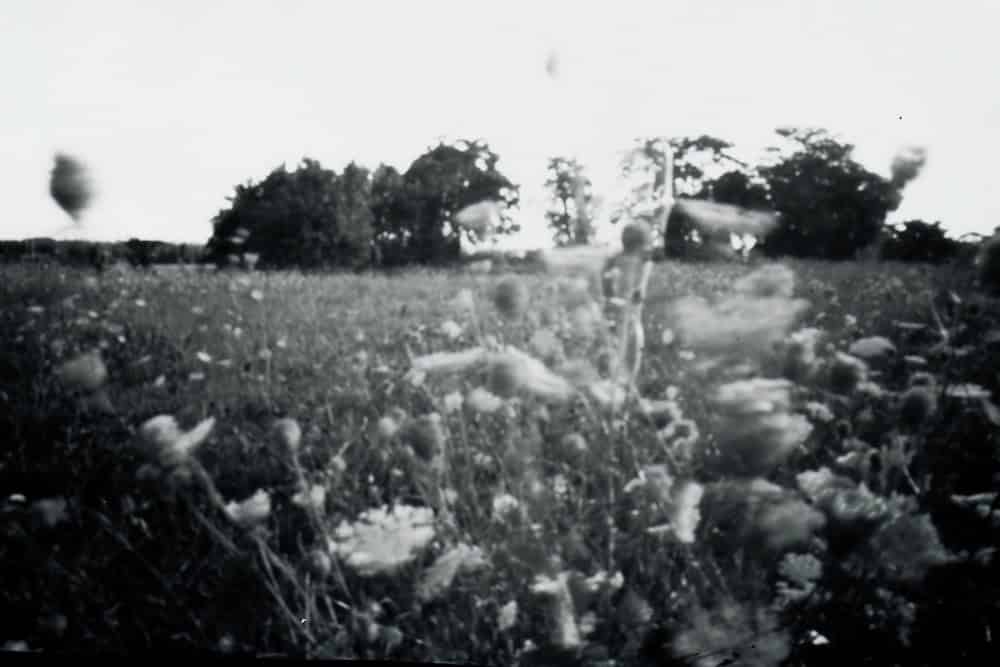
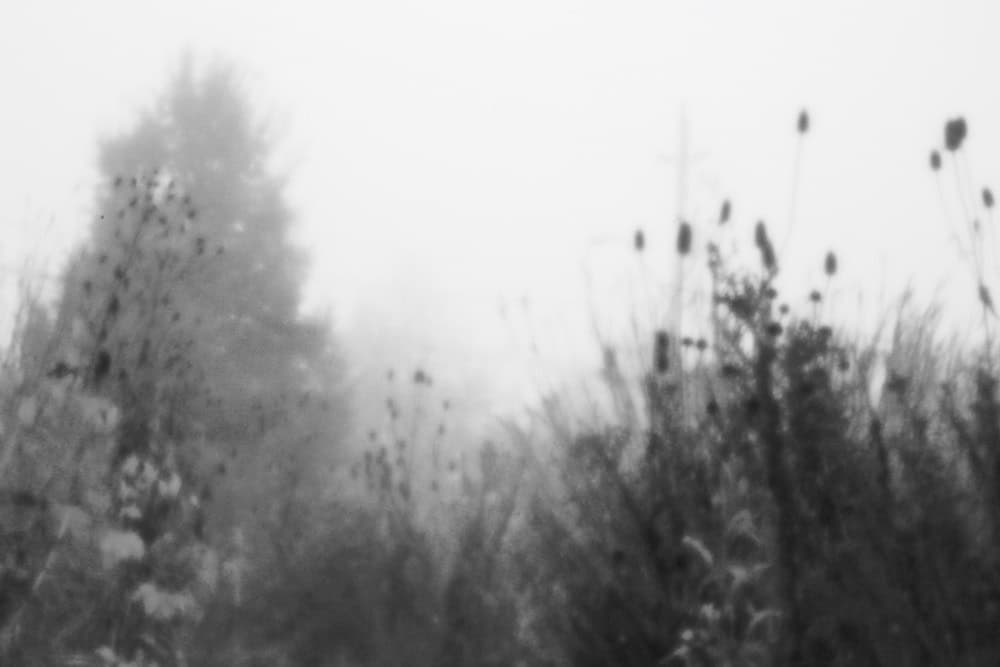
These simple homemade cameras have no viewfinder or light meter, so lots of guesswork is involved. My ‘shutter’ is a piece of tape that I peel away from the pinhole, allowing light to enter, exposing the film. Because the opening is so small, the shot needs a long exposure time (from 10 seconds to an hour or more, depending on the light level). As a result, the image captures the passage of time, which often results in blurriness and ghosting.
After the film is exposed to light, I develop the paper in the darkroom to create a negative image. There is a painterly quality to the development process, as I manipulate the chemicals and the light, never sure what to expect. I can then make a contact print (again using photographic paper), or digitally scan the negative, invert the image, and make a print.
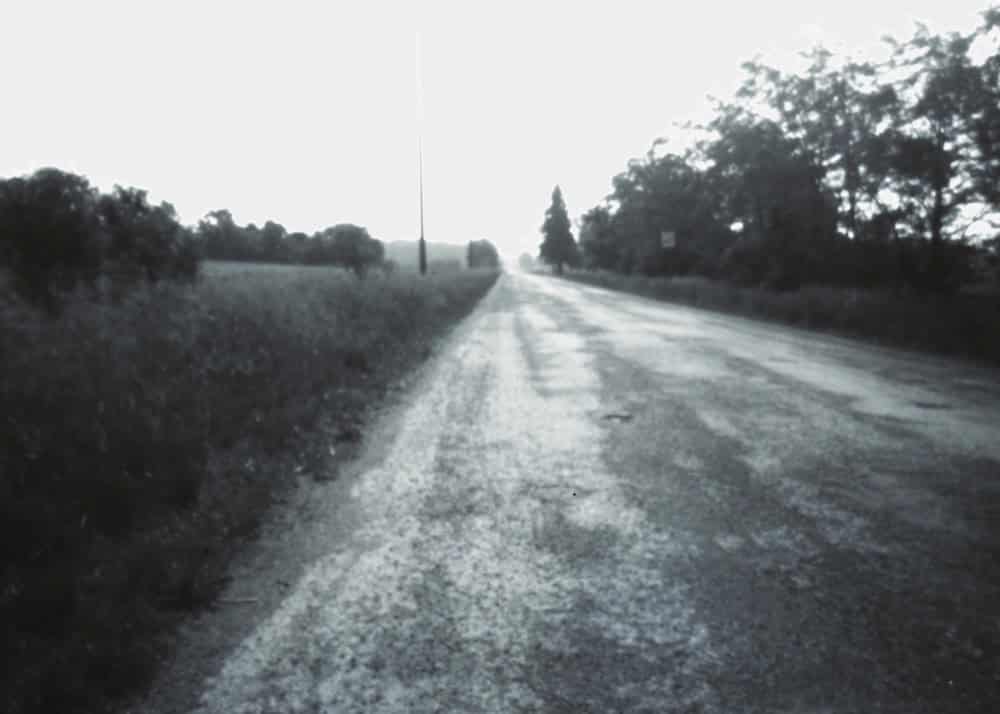
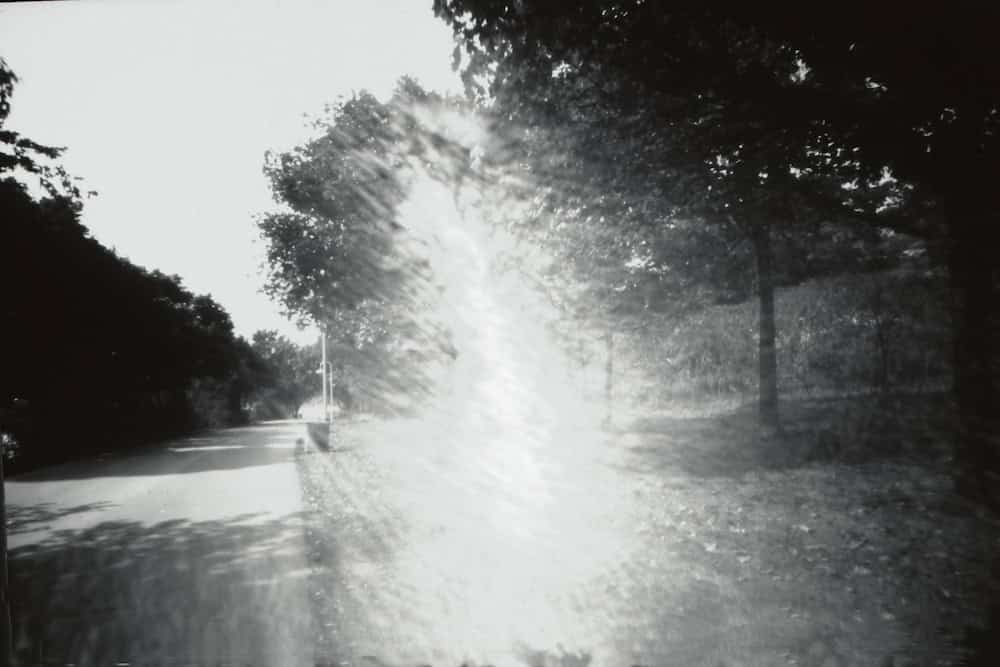
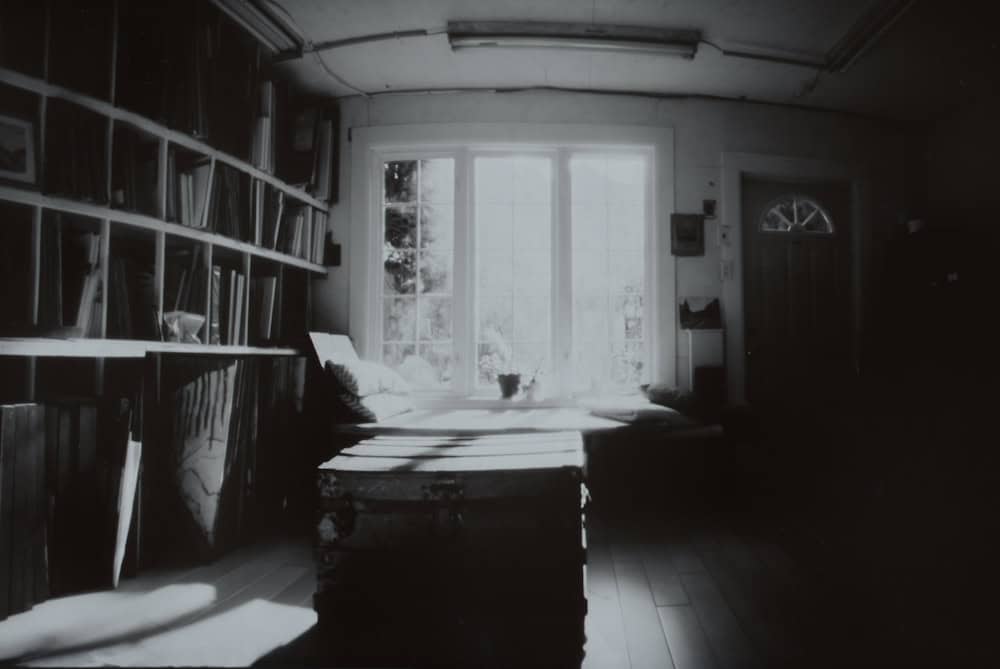
Despite the crude and inexact process, pinhole photographs can be surprisingly sophisticated, capturing more (and sometimes less) than expected. The shortcomings of the camera become advantages, as they distort and simplify the image. As with impressionistic painting, the inexactness of the process can lead to a more exciting image. Pinhole photographs are always unexpected and, sometimes, just right.