
5 Creative Techniques To Expand Your Screen Printing Practice
Screen printing is a versatile, rewarding medium with a long history rooted in both fine art and DIY culture. Whether you’re working with t-shirts, paper, textiles, or transparencies, the printing process encourages experimentation and bold visual storytelling. If you’re looking to break out of your usual workflow, here are five screen printing techniques to reinvigorate your printing practice and spark new ideas in the studio.
1. Embrace Split-Fountain Inking (A.K.A. the Rainbow Roll)
Instead of using a single colour on your screen, try loading two or more inks side-by-side and blending them directly on the screen. This creates a gradient or ombré effect in each pull with no digital blending required. It’s a great way to add vibrancy and unpredictability to your prints.
Pro tip: Use a transparent base or extender to thin inks and help the colours merge more seamlessly.
2. Print on Unconventional Surfaces
Screen printing isn’t limited to flat paper or cotton! Try printing on wood panels, plexiglass, or repurposed materials like cardboard and old maps. Each surface absorbs ink differently and introduces new texture, colour interaction, and conceptual meaning to your work.
Note: Adjust ink type and mesh count to suit the surface you’re working with: low mesh for textiles or wood, high mesh for fine detail on smooth surfaces.
3. Layer Opacity and Transparency
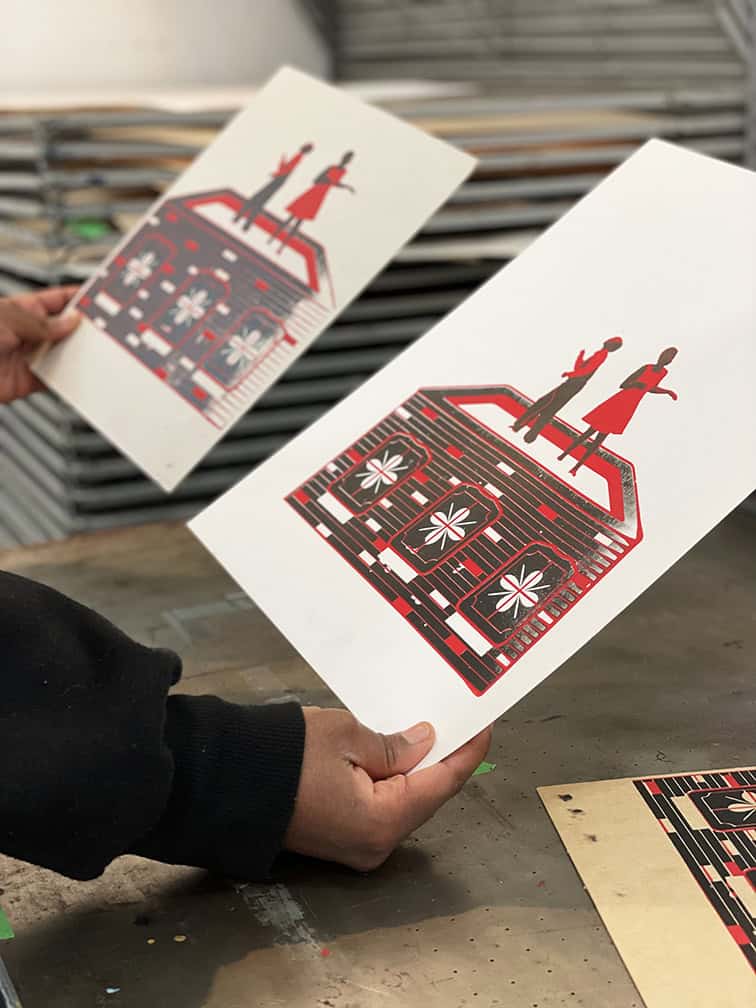
Use transparent inks and overlays to build depth and complexity in your prints. Each layer becomes a veil of colour that interacts with what’s underneath. You can create unexpected secondary hues, ghostly textures, or subtle gradations by playing around with ink transparency and registration.
Try this: Print the same image in slightly offset layers with varying transparencies to build a visual echo or sense of motion.
4. Combine Digital and Analog Artwork
Merge hand-drawn stencils with digitally produced separations. Scan in brushwork, texture rubbings, or analog collage, and mix them with vector graphics or photography. The result? A dynamic visual tension between crisp digital shapes and tactile, human marks.
This hybrid approach can keep your work feeling fresh, especially when navigating between commercial applications and personal projects!
5. Use Discharge or Glow-In-The-Dark Inks for Surprise Effects
If you’re working with fabric, discharge inks (which remove pigment from dark textiles) and specialty inks like glow-in-the-dark or puff additives can take your designs in a whole new direction. These are particularly impactful in layered work or installations that change under different lighting conditions.
Reminder: Specialty inks often require careful handling. Make sure to use masks or ventilation when needed, and always test on scrap first.
Thinking Beyond Technique
Remember, screen printing is as much about concept as craft. How do your layers speak to each other? How can you use misregistration, repetition, or colour theory to enhance the emotional impact of your work? Sometimes, what seems like a technical “flaw” can become the focal point of the print. Don’t be afraid to play.